About
I'm a design leader who spent years searching for the intersection of quantitative rigor and human-centered thinking. The search took me from nuclear physics to restaurant floors to trading desks to the CDC—and eventually to leading global design teams that ship experiences used by millions.
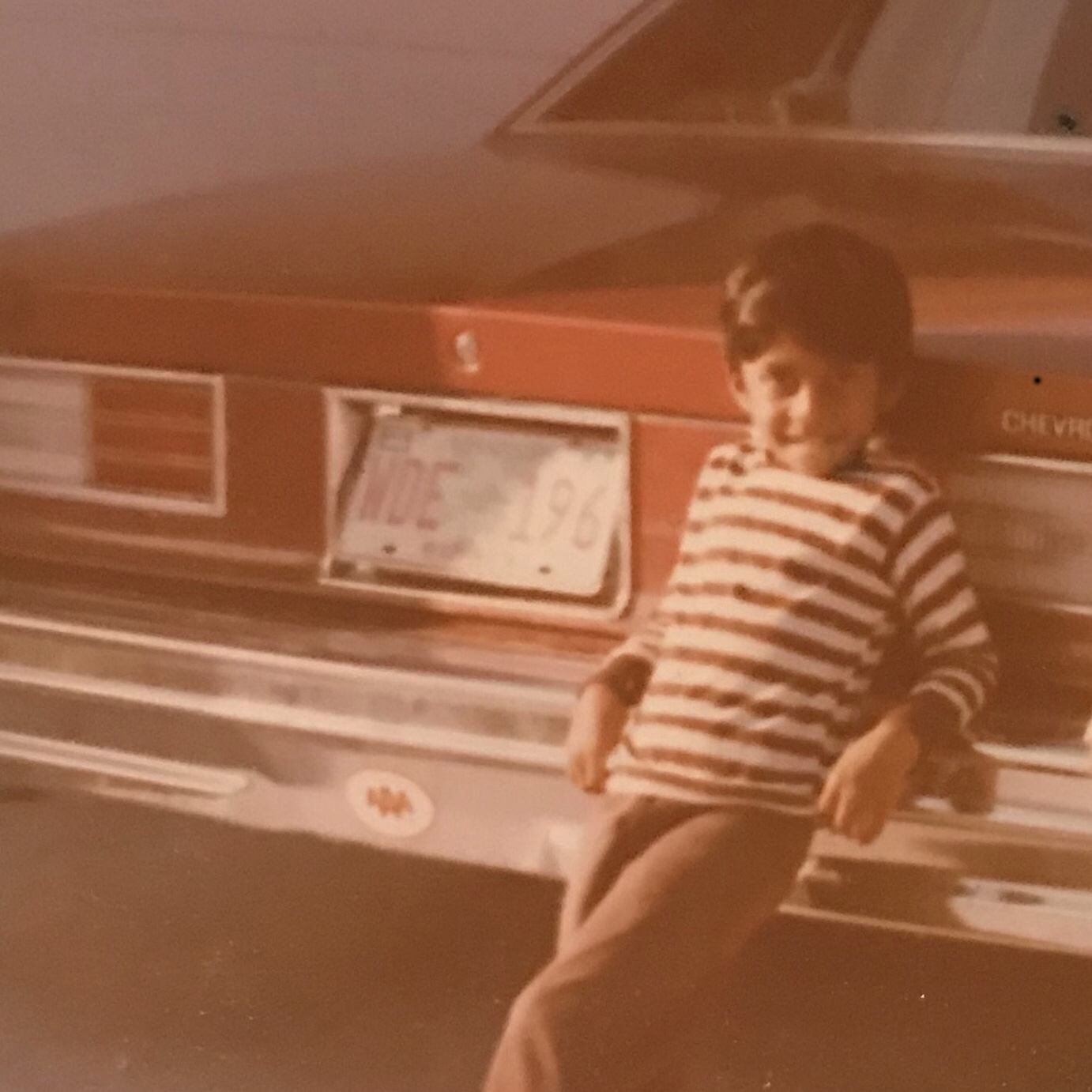 Mississippi, 1979
 Born in Bombay
I was born in the spring of 1973, the second son of a nuclear engineer and his artistic wife.
Arrived in America
My father specialized in the start-up phase of nuclear reactors, which meant we moved every 2-3 years—Vicksburg, Long Island, South Jersey, Pittsburgh, Augusta, Rochester. Being an immigrant kid in places where immigration was uncommon taught me to be an observer, to read people, to understand them from their perspective. I didn't know it then, but I was training for UX.
Physics & Engineering
I started college as a Physics and Engineering major—following the quantitative path that felt natural. But something was missing. The work felt devoid of humanity, like I was only using half my abilities. My superpowers were people, and quant world hadn't embraced them, yet.
The Restaurant Years
I swung the pendulum the other way. Restaurants were energetic, vibrant, purely human. I spent five years managing bars and restaurants—local spots, Applebee's, Ruby Tuesday's—learning to perform under pressure and read rooms full of people. But eventually I realized they were all human, no quant. I needed both.
Back to School
I returned to college in Atlanta. It was here, presenting projects to executives from Andersen Consulting and Coca-Cola, that I discovered my ability to connect the what with the why—to dig deeper into the customer, the "for who." The pendulum was finally finding center.
First Design Job
A friend connected me with the SVP of Research at Mirant, an energy trading company. He gave me his book on energy risk management; I read it in a week and came back with two pages of questions. He hired me for my curiosity and quant skills. I built interfaces for Monte Carlo simulations that predicted commodity prices.
First Big Failure, First Big Lesson
We launched a trading tool and watched usage drop from 800 users to 3 in two days. Dr. Eydeland told me to stop developing and go figure out why. I spent a week on the trading floor earning trust and gathering insights. What I learned changed everything—we redesigned the system around how traders actually worked. It was my first real UX research project, before I knew what UX was.
Married
Found a bestie willing to follow me through the next chapter of moves and adventures.
Daughter Born
Became a father. Twenty years later, watching her navigate technology with native fluency continues to fascinate me while revelaing my own biases.
Found My Path
At Morris DigitalWorks, I was doing front-end development for a social engagement product I had also designed, researched, and product-managed. The full stack of human-centered work. I realized the people aspects were what fascinated me—not just making things, but understanding who they were for and why they mattered.
First Leadership Role
Joined the CDC and faced a triple challenge: unifying a fragmented team of contractors, earning credibility in a scientific organization that valued data over opinion, and adapting UX methods to work in a world where "Apple does this" meant nothing—only evidence mattered. When the Analytics manager left, the team came to me. My first promotion followed: UX and Analytics Manager.
Detroit & Automotive
Moved to Detroit to work at General Motors. The automotive world was colliding with consumer electronics—we brought Apple CarPlay and Android Auto to life. More importantly, I learned to be strategic. UX wasn't just about usability anymore; leadership expected us to grow revenue and build customer loyalty.
First C-Suite Presentation
At Bosch, I presented an interactive customer journey workshop that changed how leadership's understanding of the buzzword "Customer Journey" and how design and research related to it. It was the moment I realized design leaders don't just make things—they change how organizations think.
Global Design Leadership
Today I lead a 70-person global team at Siemens—researchers, designers, content strategists, and taxonomists across San Francisco, Munich, and beyond. We ship experiences used by millions, powered by design systems used by thousands. The quant kid and the people-reader finally work as one.
What's Next
Two of my grandmothers were college professors, as were several uncles. Teaching is in my blood. As I wind down my professional career, I plan to become a full-time researcher and teacher—helping others find the tools to discover truth in a world where technology constantly reshapes it.
The Through Lines
A few things have stayed constant across all these chapters:
Design obsession. Whether it's pens, watches, cars, or digital interfaces—I've always been fascinated by design decisions. The 24 cars I've owned weren't collecting; they were experiencing. Like some people love to try food, I love to live with cars and understand the thinking behind them.
Quantitative curiosity. I'm still enamored with black holes, time as a fourth dimension, and the boundaries of what we can know. More practically, I've learned exactly how much to trust my hunches versus data—and when each one matters.
Service. I believe deeply in servant leadership—the idea that the best leaders grow others, not just outcomes. I'm as proud of the careers I've helped develop as the products I've shipped. Beyond coporate life, I've built design curricula for high school programs, led courses at General Assembly, and guest-lectured at universities. Helping others find their own truth in complexity is the work I want to do for the rest of my life.
Contact Me.